Project
Rosa Lewis created a collection of imaginal meditations and a video mandala that invite people to feel what it’s like to dissolve their boundaries with the infinity of nature, feel ecosystem fluxes and cycles and, through that process, reimagine their relationship with the world. Using the metaphors of the biosphere’s breath as imaginal doorways into the depths of experience, the embodied meditation practices will connect people to a sense of interdependence, wholeness, and fundamental goodness, including in the face of fear, ecosystem grief, or other challenging emotions.
Artist Bio
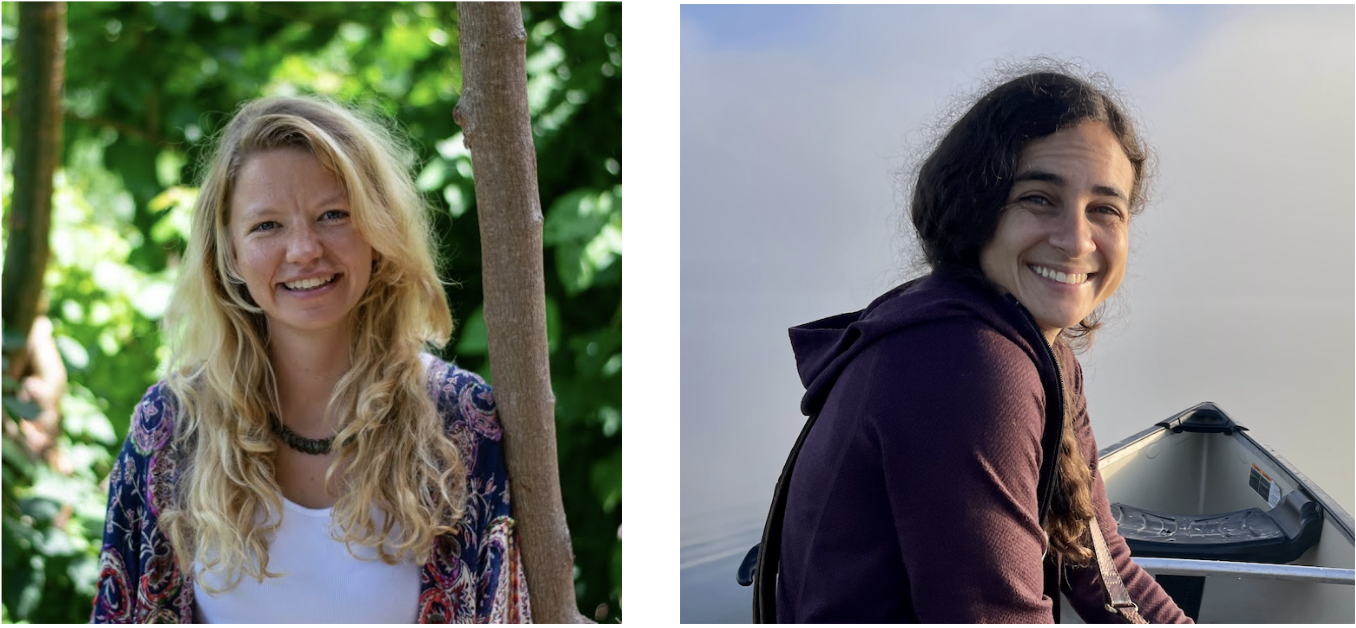
Rosa Lewis is a mystic, meditation guide and artist. She is passionate about sharing a connection to experience that opens up more freedom, joy, wholeness, and access to truth. Some of the things her teaching combines are Buddhist emptiness, shadow work, tantric embodiment, the archetypal realm, mysticism, and a radically new way of relating to the heart. She has created a new practice called Shared Imaginal Practice, is writing and illustrating a book called ‘Being Buddha Nature’, and is developing an awakening course that will help people get in touch with true nature. Discover more of Rosa Lewis’s work at rosalewis.co.uk and imaginaljourneying.com.
Science Collaboration
As an ecohydrologist, Maoya Bassiouni’s research combines physical theory and ecosystem ecology with data science to understand how vegetation interacts with environmental change and how these interactions influence water, carbon, and energy cycles from soil, plant, to the biosphere. Her research analyzes and integrates data from hundreds of global eddy covariance tower sites in FLUXNET to diagnose and synthesize land-atmosphere interactions, vegetation water-carbon tradeoffs and quantify key eco-evolutionary principles that enhance our understanding and predictive capacity of complex environmental systems and ecosystem services.
Artworks
Flux Mandalas: visualizations of carbon dioxide, water vapor, and energy seasonal cycles from FLUXNET data around the world, each creating unique patterns that portray ecosystems as radiant compassionate beings.(See More)
Activities & Exhibitions
December 16, 2025: Presentation, Creative Curiosity in fluxART Reveals Beauty and Wonder of Ecosystem Science, American Geophysical Union Annual Meeting, New Orleans LA
October, 2025: Embodying the Biosphere' Breath, art showcase, Alembic, Berkeley CA ()>news story)
October, 2025: Breathing as the Biosphere launched on youtube and Spotify (read more)
May, 2025: Open call for Breathing as the Biosphere video mandala contributions (read more and submit your clips)
April, 2025: Imaginal practice prototyping residency, Amsterdam, Netherlands
March, 2025: Exhibit, Flux Mandalas, data visualization, Hilgard Hall, UC Berkeley, CA (news story)
December 12, 2024, Presentation, Contemplating the Biosphere’s Breath to Dissolve Climate Anxiety, American Geophysical Union Annual Meeting, Washington DC (news story)
September 21, 2024: Installation and audiovisual meditation, Tonglen with the Biosphere’s Breath, Alembic Equinox event, Berkeley CA (news story)
August-October, 2025: Breathing Corn, flux data visualization, Harvest Art show, Alembic, Berkeley, CA
September 4, 2024: fluxART presentation, Ameriflux annual meeting, Berkeley CA (news story)
Acknowledgements