Artist Mallery Quetawki in partnership with ecologist Marcy Litvak visited a series of dryland flux tower sites in New Mexico, spanning ~5,000 feet in elevation. These sites encompass a gradient of ecosystems from desert grassland and shrubland to juniper savanna, piñon-juniper woodland, ponderosa pine forest, and subalpine mixed conifer stands.
In drylands, what may appear sparse on the surface becomes a place rich with biodiversity, knowledge, memory, and natural gifts. Mallery collected natural pigments and materials from the soil and plants collocated with Marcy’s water, carbon, and energy flux measurements. Working with scientific data and Indigenous knowledge, Mallery integrates ecological and cultural layers into her artwork.
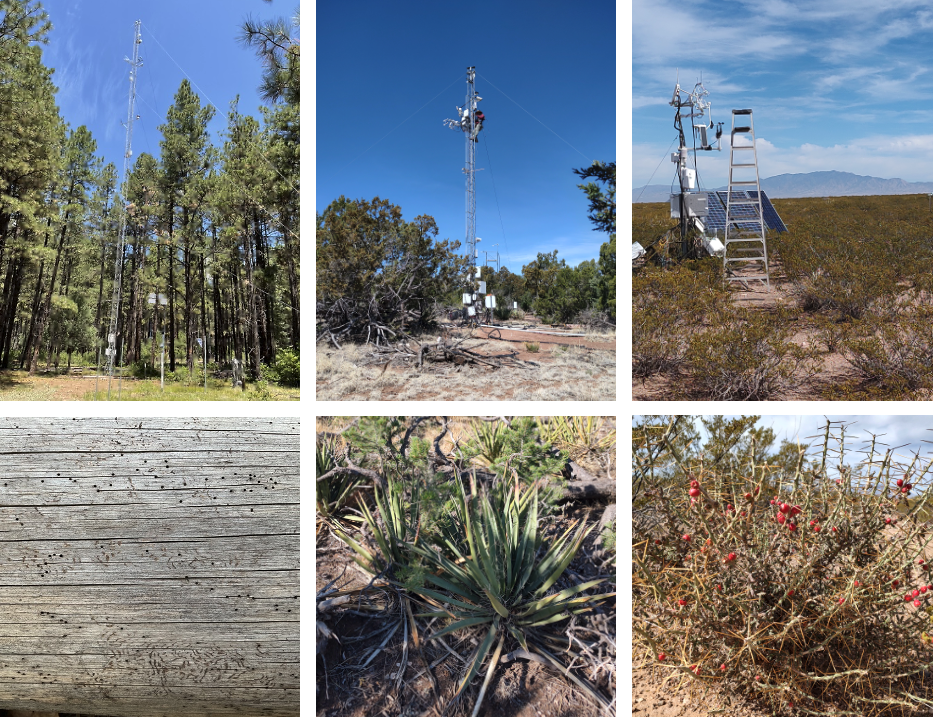
Mallery created the Yanhaku (Breathe In) series from traditionally gathered materials at flux tower sites, including mineral and plant pigments, yucca root, and cactus fruit. The carbon seasonal cycles represented in the works evokes the breath in and out of this ecosystem.
The Yanhaku (Breathe In) series portrays the dance between ecosystems and people as they breathe to balance and sustain one another.
“Aweklan Tsit’da, or Mother Earth, has many moving parts and living entities from the atmosphere to the soils of the lands we live on. In Zuni culture, the meaning of breathing in (Yeh’chu) and adding breath (Binnan Dehliyah:u) is the action of gratitude for what Mother Earth has given us to be here today and to continue the song, dance and prayer for continued “breath”. The Southwest offers drought and temperature extremes and its habitants have co-survived these harsh elements by utilizing the seasonal availability of plants and minerals to sustain both life and tradition.” – Mallery Quetawki
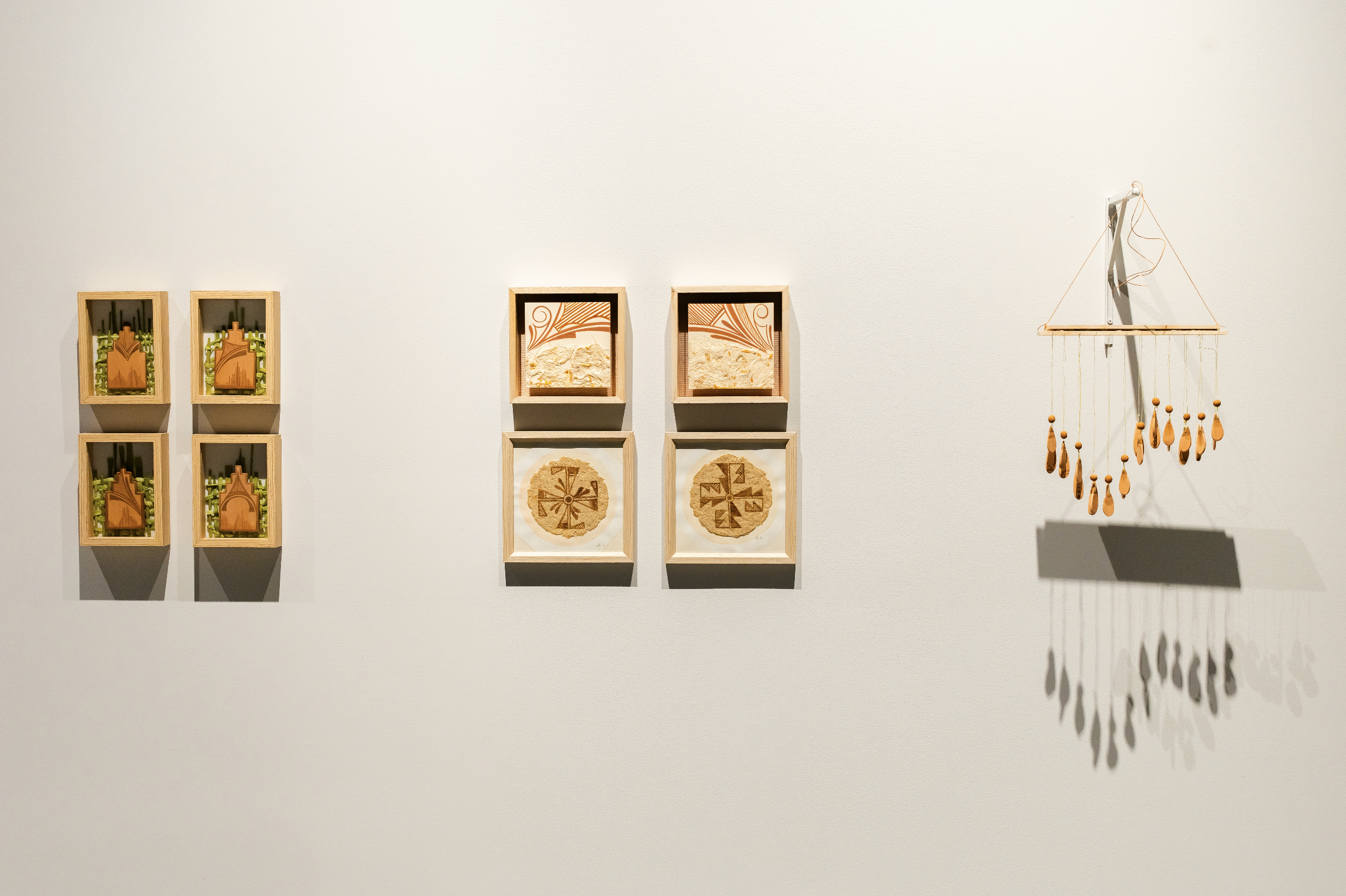
Binnan Dehliyah:u (Adding breath), 2025, yucca plant fibers, natural pigments, 8" x 8" inches (x4).
Yeh’chuna:we (Breathing in), 2025, natural clay, yucca plant fibers, natural pigments, 5" x 7" (x6).
Yanhaku, 2025, natural clay, yucca plant fibers, natural pigments, 4" x 24" (windchime).